
Putnam Parole and Probation
Parole and probation can both place a released person under Georgia Department of Community Supervision, or DCS, but they begin in different ways. The Georgia State Board of Pardons and Paroles decides whether an eligible state prisoner receives parole. A judge orders probation as part of a criminal sentence. Someone may leave Putnam County Jail on probation without entering a Georgia Department of Corrections prison. Another person may leave state prison on parole and report to the same regional DCS office.
| Status | How it begins | Best verification |
|---|---|---|
| Parole | Conditional release from prison by the Parole Board | Parolee Search, then DCS |
| Felony probation | Court-ordered community or split sentence | Putnam court docket and DCS |
| Discharge | Sentence or supervision has ended | Agency record or final court order |
A person can finish a sentence without parole and have no active DCS supervision. Likewise, release on bond leaves a criminal case pending but is not parole. The Putnam County released-inmate search paths separate jail release, transfer, parole, probation, and final discharge.
- Parole
- Conditional community release from confinement before sentence expiration.
- Probation
- A court sentence served in the community under stated terms.
- Absconder
- A supervised person alleged to have stopped reporting or left supervision without approval.
- Discharge
- The formal end of a sentence or supervision term.
Verify Putnam Post-Release Supervision
Start with the sentence source, not a general name search. The public Georgia Parolee Search is the main parole-status channel. It is not meant to confirm a routine bond release from Putnam County Jail. Court records are stronger for probation because they can show sentence terms, revocation filings, and later orders.
- Confirm the full name and, when available, date of birth, GDC ID, conviction county, or case number.
- Search Parolee Search if state-prison parole is possible. Match more than the name.
- Check the Putnam County Clerk search for the sentence, probation order, or revocation activity.
- Use the DCS Milledgeville office listing to confirm the office serving Putnam County.
- Request an official record from the responsible agency when written proof is needed.
For a person still in prison, the Tentative Parole Month explanation and TPM lookup address possible timing. A TPM is a review month, not a guaranteed release date. For a person who bonded out locally, contact the jail, review the court order, or check Georgia VINE instead.
Putnam Supervision Office Details
Putnam County does not have an Eatonton DCS field office identified in the research. The Milledgeville field office serves Putnam as part of a multi-county region. People already given reporting instructions should follow those instructions, since an assigned officer or reporting site may be more specific than the general office listing.
Georgia DCS Milledgeville Field Office2930 Heritage Place
Milledgeville, GA 31061
Phone: 478-452-0152
Fax: 706-403-2421
Monday-Friday, 8:00 a.m.-4:30 p.m.
The office serves parolees and felony probationers in Putnam, Baldwin, Greene, Hancock, Jasper, Jones, Morgan, Wilkinson, and the Ocmulgee Circuit area. That regional scope makes a careful identity match important before drawing a conclusion from an office or name.
The Georgia Department of Community Supervision is the supervising agency. The Parole Board makes parole decisions. Putnam County courts impose probation, while the sheriff manages local jail custody and warrants.
Putnam Warrants After Release
Release from custody does not erase later warrant or violation issues. Conditions can include reporting, approved residence, fees, treatment, travel limits, or other terms in the controlling order. A claimed violation may lead to agency action, a court filing, or a warrant, but it should not be inferred from an old jail record.
The sheriff's Warrants and Civil Process page says the office maintains about 500 active arrest warrants at a given time and serves Putnam warrants plus warrants from other jurisdictions. That figure describes active warrants, not released inmates or absconders. Warrant questions can be directed to 706-485-8557 extension 206 or the contacts published by the sheriff. Parole or probation absconder questions belong with DCS, the Parole Board, or the relevant court record.
Georgia VINE may alert users to a custody change, but it does not replace a supervision record. A person can be out of jail and still face a warrant, or be transferred and remain confined elsewhere.
How Putnam Supervision Ends
Supervision ends through a formal discharge, sentence completion, court order, or other action by the agency with authority over the case. The absence of a person from a current search is not enough to prove discharge. Search feeds can lag, names can be entered differently, and older records may remain visible after active supervision ends.
For probation, read the sentencing order and later docket entries. For parole, check the parole record and seek agency confirmation when the end date matters. Georgia's open-records framework can provide nonexempt agency records, but privacy and security exemptions may limit details. A discharge from supervision also does not erase the arrest or court case. Georgia uses separate record-restriction procedures for eligible history.
Keep the date and source of every result. A screenshot can preserve what a public system displayed, while a written agency response is the stronger record for legal or personal documentation.
Jail Channels End at Release
The Putnam jail page lists inmate mail and account-deposit channels for people still confined. Those tools do not verify parole, probation, or discharge after someone leaves. Once release occurs, the court, records office, Parole Board, and DCS become the useful channels.
This distinction prevents a common error. A failed jail deposit or unanswered jail mail does not prove release. Confirm custody first, then use the supervision source that matches the sentence.
The official Jail Division page remains useful for local custody and bond information, while state systems answer the post-release question.
The image below comes from the Georgia parole-process page.
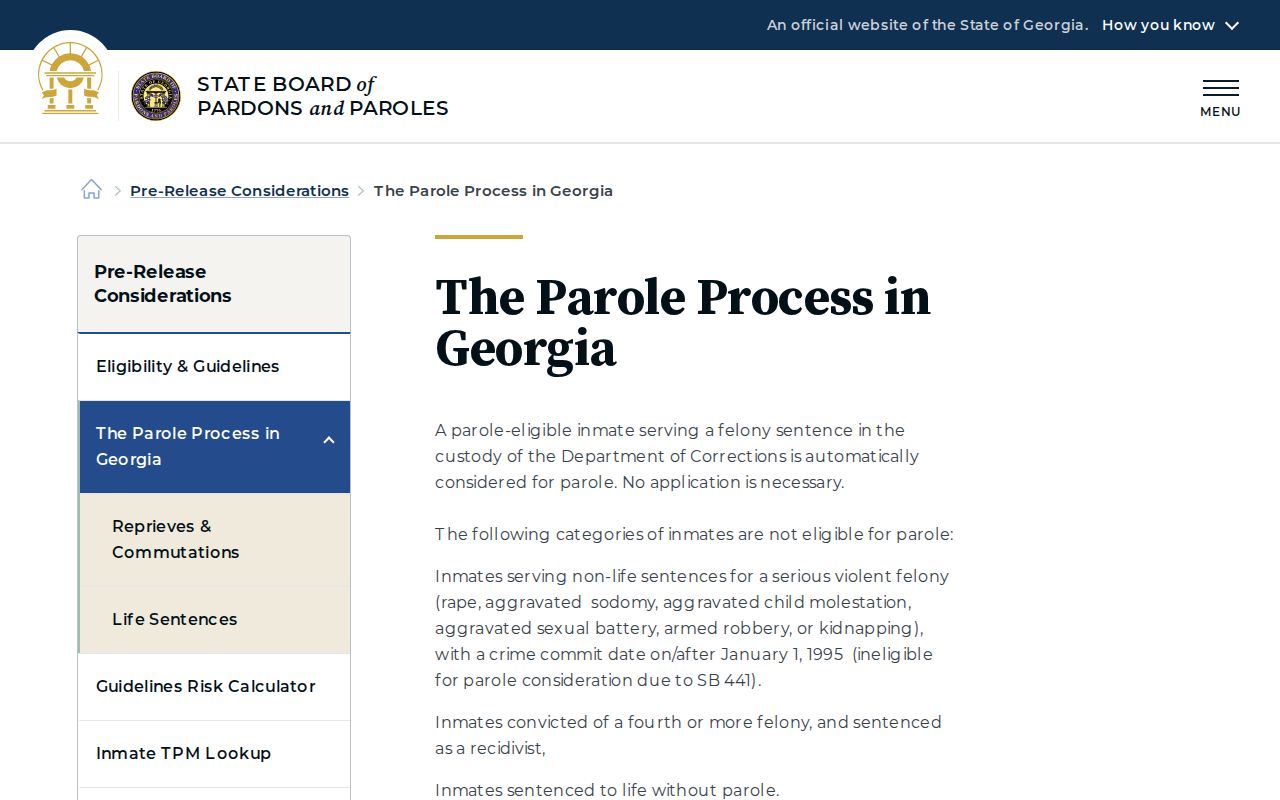
It illustrates the state process that applies after a Putnam case results in a parole-eligible prison sentence.